Sunalite is reader-supported. As an Amazon Associate I earn from qualifying purchases. This post contains affiliate links. Learn more.
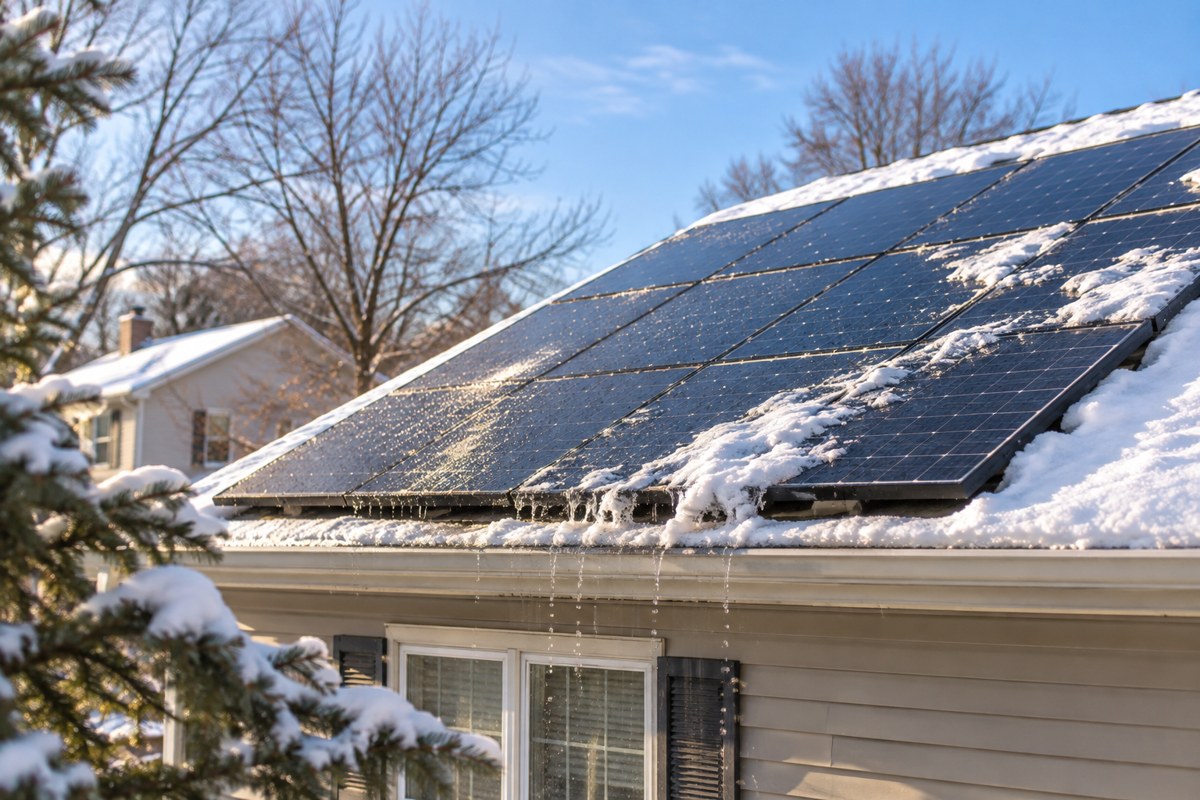
If you have solar panels on your roof, or you are thinking about them, the first snowy week of December can make you wonder if they are doing anything at all. The same goes for a portable panel you plan to use to recharge a power station during a winter outage.
The good news: panels keep working all winter. The less good news: winter is the slowest season for solar, especially in northern states. This guide explains why, what snow really does, how to handle it safely, and how to set realistic expectations for both rooftop systems and portable panels.
Table of Contents
The Short Answer: Cold Helps, Short Days Hurt
Solar panels turn light into electricity, not heat. In fact, heat works against them. Panels are rated at a cell temperature of 25°C (77°F), and output drops as they get hotter, according to EnergySage. On a cold, clear January day a panel can run cooler than its rating and squeeze out a few extra percent.
Here is the math. EnergySage lists temperature coefficients for two popular panels of -0.24% and -0.30% per degree Celsius. With a -0.30% coefficient, a panel whose cells sit at 0°C (32°F) instead of 25°C gains about 25 x 0.30 = 7.5% compared to its rating. A summer panel baking at 50°C loses about the same amount.
So why do panels make less power in winter? Three reasons: fewer hours of daylight, a sun that sits low in the sky, and snow or heavy clouds that block light. The cold itself is not the problem. If you live in Illinois and are weighing rooftop solar, our guide on whether solar is worth it in Illinois covers payback and incentives.
Why Winter Output Drops in Northern States
| Factor | Late June (summer solstice) | Late December (winter solstice) | What it means for panels |
|---|---|---|---|
| Daylight at about 42° north (e.g. Chicago, Boston, Detroit) | About 15 hours, 13 minutes | About 9 hours, 7 minutes | Roughly 6 fewer hours to make power each day |
| Sun height at noon | About 72° above the horizon | About 25° above the horizon | Light hits at a lower angle and passes through more atmosphere |
| Panel temperature | Hot panels lose a few percent | Cold panels gain a few percent | A small bonus in winter, not enough to offset short days |
| Snow cover | None | Possible after storms | Output can drop to near zero until snow slides or melts |
| Cloud cover | Often sunnier stretches | More gray days | Panels still produce on cloudy days, just much less |
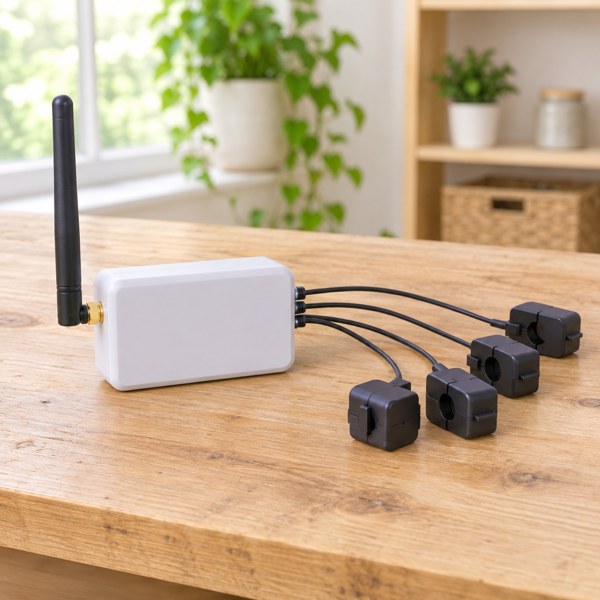
Emporia Vue 3 energy monitor
If you own rooftop solar, a home energy monitor shows exactly how much your panels make each winter day. It turns the table above into your own real numbers, so a slow December looks normal instead of worrying.
- Tracks whole-home and solar power
- Optional circuit sensors, up to 16
- Installs in panel, use an electrician
What Snow Actually Does to Solar Panels
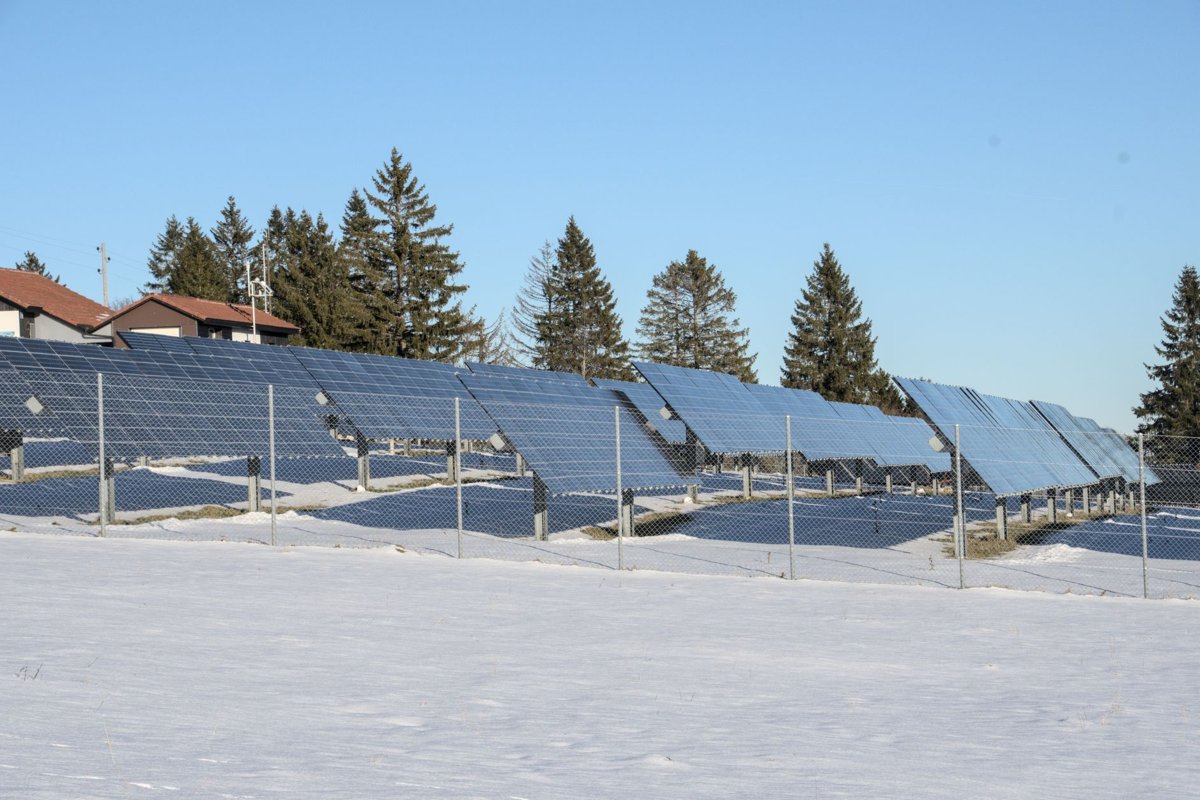
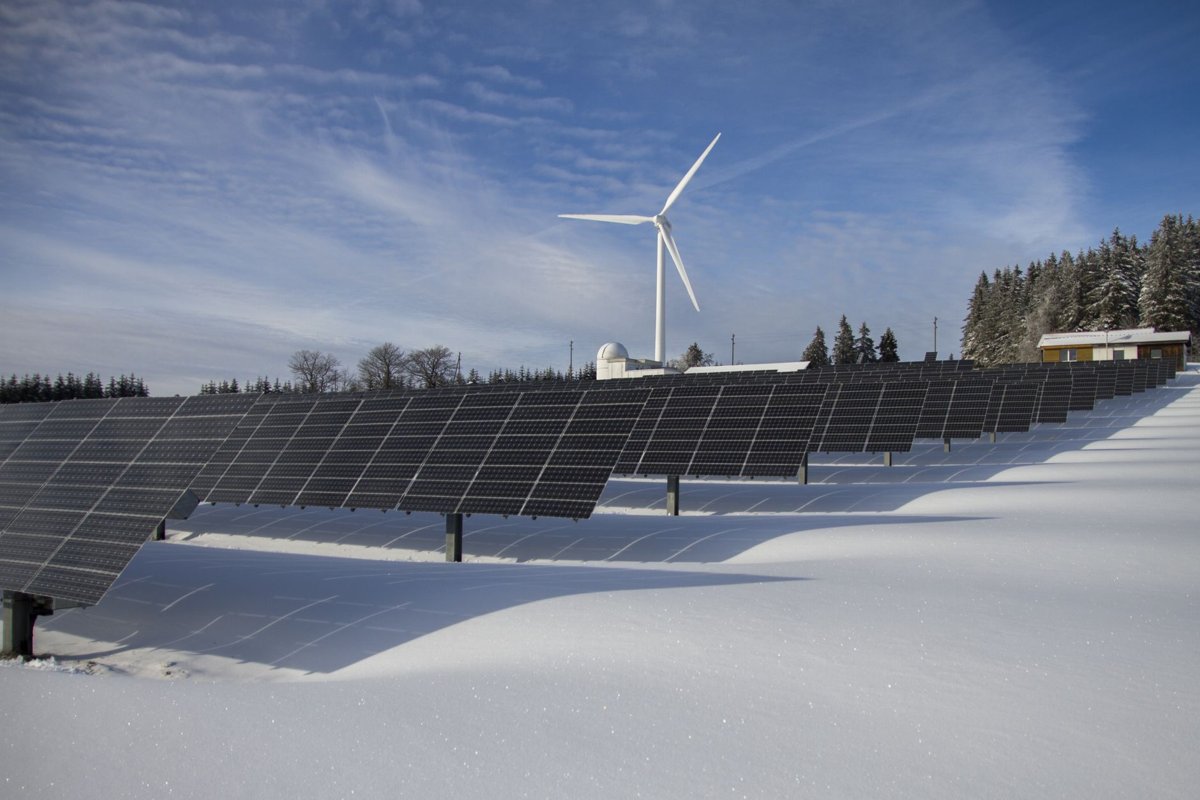
- A light dusting barely matters. The U.S. Department of Energy notes that a dusting has little impact because wind can easily blow it off, and some light still reaches the cells.
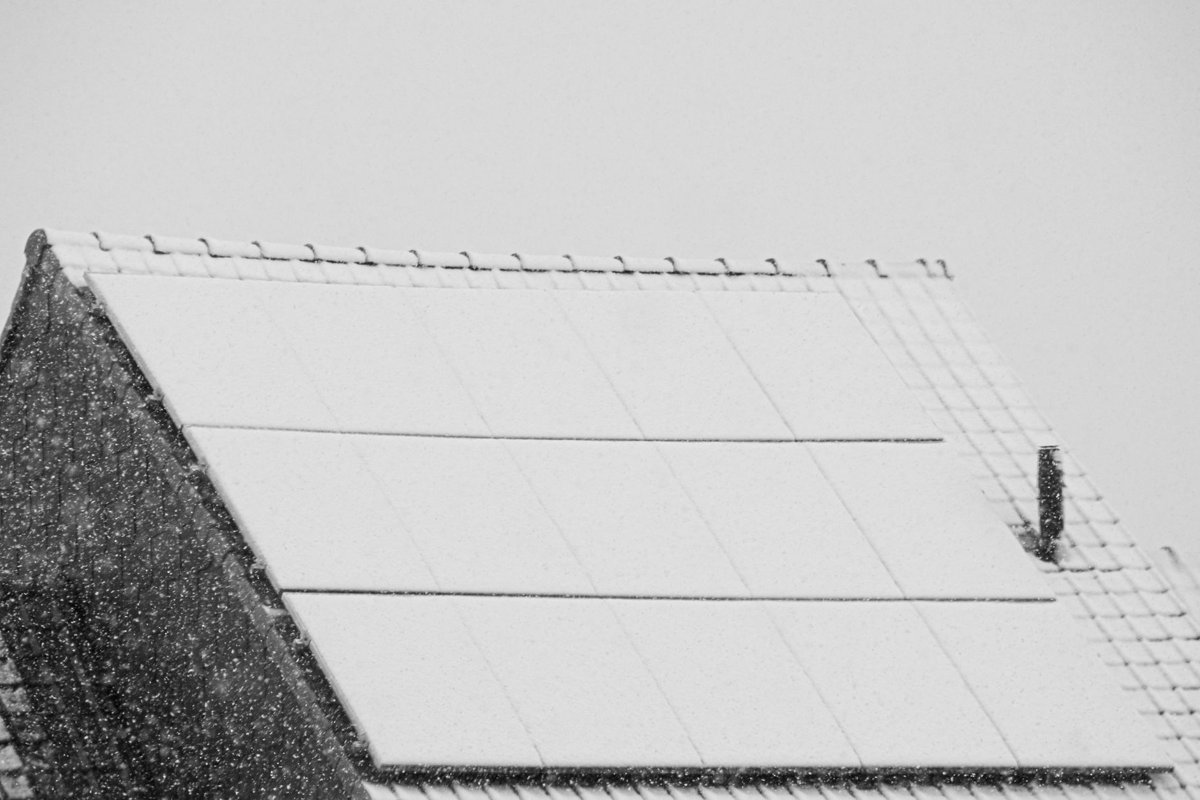
- Heavy snow stops production until it clears. A thick layer blocks the light completely. Once it slides or melts off, the panel goes right back to work.
- Tilted, dark glass sheds snow on its own. Most roof panels sit at an angle, and once the sun hits the glass, snow tends to slide off, often within a day or two of a storm.
- Snow on the ground can help. Bright snow reflects light. That reflected light can add a little output, and it is one reason bifacial panels (which collect light on both sides) are popular for ground use.
- Snow cleans panels. As it slides off, it carries dust and pollen with it, so panels often look cleaner in spring.
- The yearly loss is usually modest. An NREL report notes that studies have measured annual snow losses ranging from 0% to 25% depending on climate and setup. Most of that loss lands in winter months, when panels already make the least power.
Should You Clear Snow Off Your Panels? A Safe Approach
- Wait a day or two first. In most storms, sun and the tilt of the panels clear the snow without any help. Patience costs you very little power.
- Check your warranty and ask your installer. Some installers advise against clearing panels yourself because scratches or cracked glass may not be covered. Ask what they recommend before you touch anything.
- Stay on the ground. Never climb onto a snowy or icy roof. A small amount of lost solar power is never worth a fall.
- Use only a soft tool made for panels. If panels are low enough to reach safely from the ground, use a soft foam-head snow rake made for solar panels. Never use a metal rake, shovel, ice scraper or ice chipper.
- Leave a thin layer behind. Push off the loose top snow and let the sun do the rest. Scraping down to the glass is how panels get scratched.
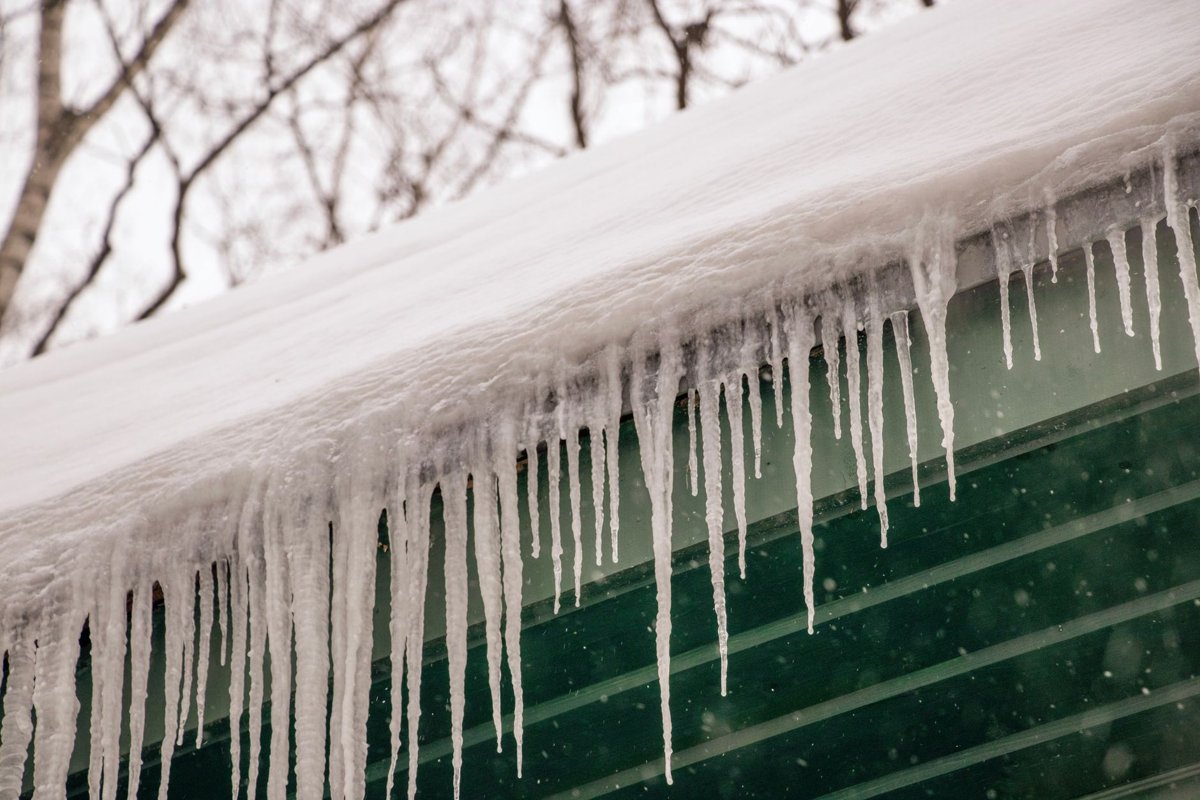
- Never use hot water or de-icer on the glass. Hot water on frozen glass can stress it, and the runoff can refreeze into ice on the panels and the roof edge.
- Watch for sliding snow. Snow can slide off panels all at once. Keep people, pets and cars away from the drip line, and ask your installer about snow guards if panels sit above a door or walkway.
Common Winter Solar Mistakes
- Judging your system by one gray week. Winter production is low by design. Compare a full year of output, not a single snowy stretch.
- Clearing panels from a ladder in icy weather. Ladders and ice do not mix. Leave rooftop work to a professional, or just wait for the melt.
- Expecting rooftop solar to power the house during an outage. Most grid-tied systems shut off when the grid goes down, as a safety feature for utility line workers. Without a battery designed for backup, your panels will not keep the lights on.
- Charging a cold power station. Many lithium power stations will not charge below freezing. Check the manual and keep the unit indoors at room temperature.
- Laying a portable panel flat. A flat folding panel in December catches the low sun poorly and holds snow. Tilt it up toward the south.
- Running cords through a closed door. Pinched cables get damaged. Use a cable rated for outdoor use and route it through a gap that does not crush it.
Portable and Plug-In Panels in Winter: Real Numbers
Portable panels follow the same rules as rooftop panels, with one big advantage: you can aim them. Point the panel south and tilt it steeply, around 55 to 60 degrees from flat, so it faces the low winter sun. Move it during the day if shadows from trees or the house creep in.
Here is a simple way to estimate a winter day. Say a 220W bifacial panel gets the equivalent of 2 hours of full sun on a clear December day (an assumption for planning; cloudy days give much less). Real-world losses from wiring, angle and heat usually trim 20% to 30%, so use about 0.75: 220W x 2 hours x 0.75 = about 330Wh. That is enough to put a solid dent in a 1,000Wh power station, but not to refill it in one day.
Now the battery side. A 1,024Wh power station running a refrigerator that averages 60 to 80W lasts about 1,024 x 0.85 / 70 = roughly 12 hours per charge, so one panel on a clear day buys back a few extra hours. To size a station for your own loads, use our guide to what size power station you need.
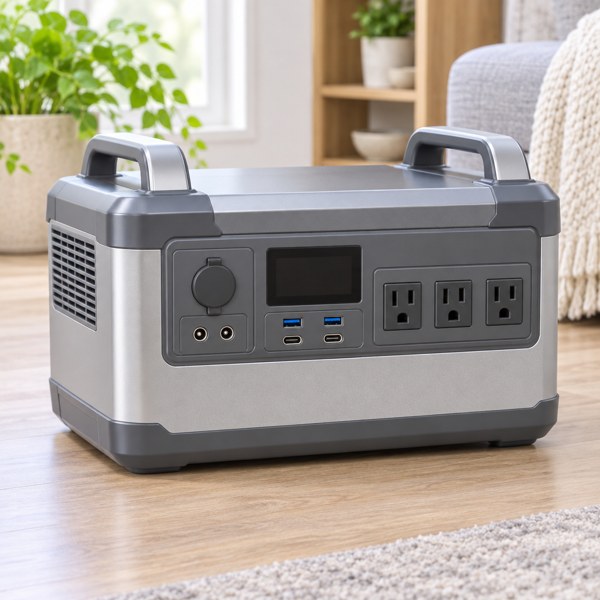
Temperature matters for the battery more than the panel. The EcoFlow DELTA 3 Plus, for example, lists a charging range of 32 to 113°F. Keep the station inside where it is warm and run the panel cable in from outside. For balcony and plug-in setups, see our explainer on how plug-in solar panels work.
EcoFlow DELTA 3 Plus
A power station like this one stores the energy a winter panel collects, then runs a fridge or Wi-Fi through the night. It charges from the wall too, so it is ready before a storm.
- 1,024Wh LiFePO4 battery, 1,800W output
- Up to 500W solar input
- Charges from 32 to 113°F
How to Get the Most From Solar in Winter
- Track your own numbers. A whole-home monitor like the Emporia Vue 3 shows solar production and home use side by side, so you can see what winter really looks like for your roof.
- Trim winter shade where you can. Bare trees still cast shadows from branches, and the low sun makes every shadow longer. Ask an arborist about branches over the roof.
- Shift big loads to midday. Running the dishwasher or laundry around noon uses solar power directly when panels are producing the most.
- Keep portable panels clear and tilted. Brush off snow with a soft foam snow rake, tilt steeply south and set them on dry ground or a deck.
- Plan winter outages around batteries, not panels. Solar is a recharge source, not a guarantee. Keep a charged power station and follow our power outage checklist.
- Think in full years. Summer production does the heavy lifting. Many homeowners in northern states see a big seasonal swing, and that is normal.
Helpful Products
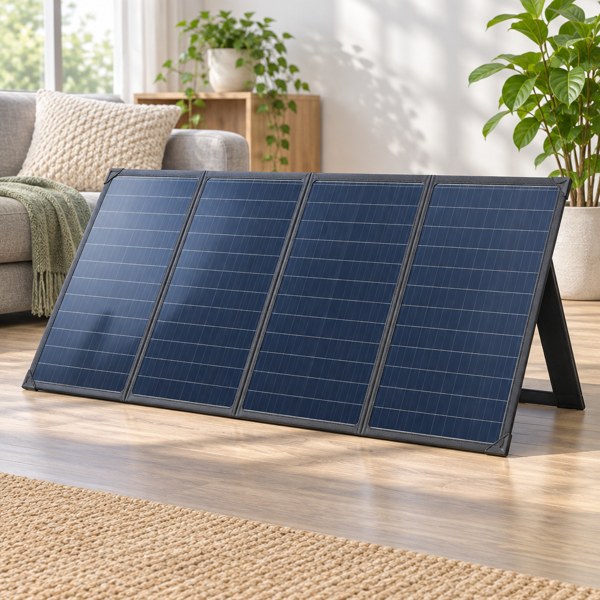
EcoFlow NextGen 220W Bifacial Panel
A good fit for homeowners who want a way to recharge a power station during a winter outage. Its bifacial design collects light on both sides, so bright snow on the ground can add a little extra output.
- 220W front, bifacial rear side
- Up to 25% efficiency
- IP68 rating, about 15.9 lbs
EcoFlow DELTA 3 Plus
A 1,024Wh LiFePO4 power station that accepts up to 500W of solar and fast AC charging.
Emporia Vue 3 energy monitor
Shows your solar production and home electricity use in an app, so you can see real winter output.
Soft foam solar panel snow rake
A non-scratch foam head on a long pole for panels you can reach safely from the ground.
Frequently Asked Questions
Do solar panels work when covered in snow?
Not much. A light dusting lets some light through, but a thick layer blocks it until the snow slides or melts off. On tilted panels that usually happens within a day or two after the sun returns.
Do solar panels work on cloudy winter days?
Yes, but output drops a lot. Panels still make some power from diffuse light on gray days, though far less than on a clear day. A portable panel behaves the same way.
How much less do solar panels produce in winter?
It depends on your roof angle, shade and weather, but December and January are the lowest months by a wide margin because northern cities like Chicago, Boston or Minneapolis get about 6 fewer hours of daylight than in June. Southern states see a smaller drop. A monitor like the Emporia Vue 3 shows your actual numbers.
Can I charge a power station with solar in the winter?
Yes. Tilt the panel steeply toward the south and keep the power station indoors where it is warm, since many units will not charge below 32°F. Expect a partial recharge on a clear day, not a full one.
The Bottom Line
Solar panels work in winter, and the cold helps them run efficiently. Short days, a low sun and occasional snow are what slow things down, especially in northern states, so expect your lowest output in December and January and judge your system over a full year. Let snow clear on its own, never climb a snowy roof, and if you rely on a portable panel for outages, pair it with a well-sized power station kept indoors. Facts here were last checked in November 2026. This is general information, not financial or tax advice.