Sunalite is reader-supported. As an Amazon Associate I earn from qualifying purchases. This post contains affiliate links. Learn more.
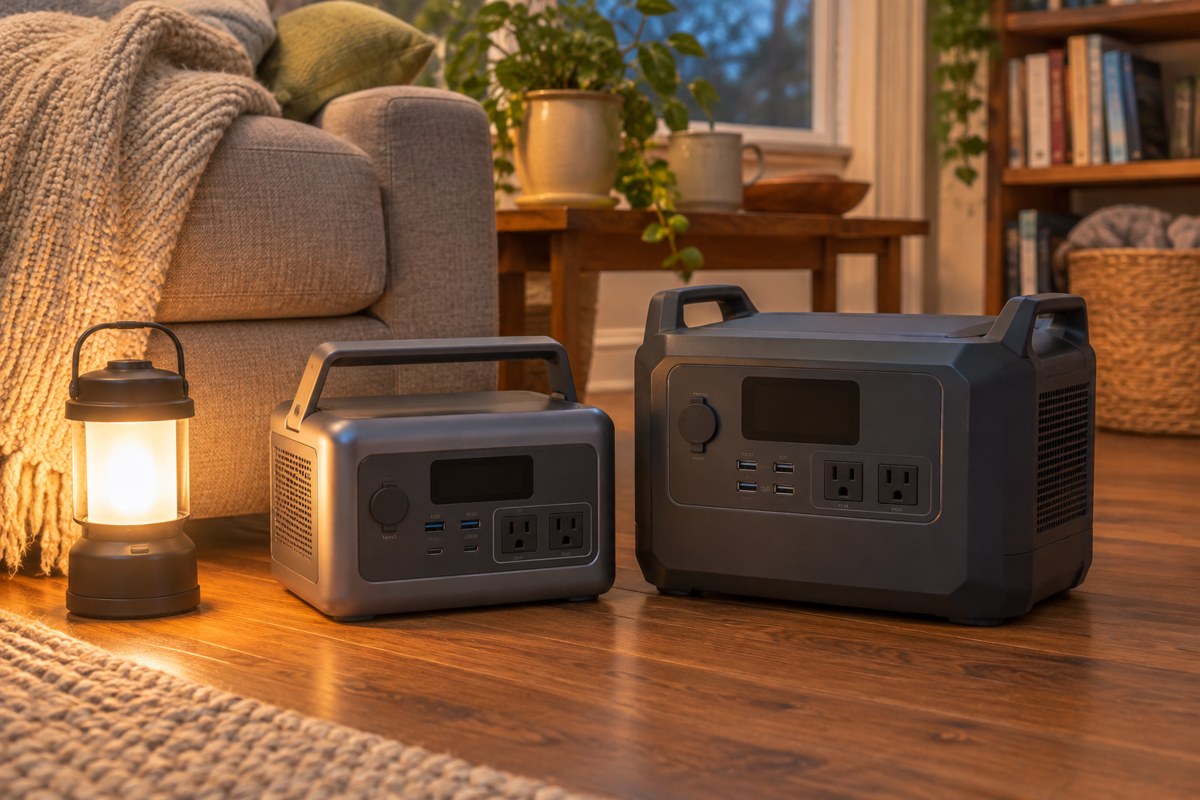
Jackery vs EcoFlow is the matchup most people land on once they narrow the field to the two biggest names in portable power stations. Both brands now use long-life LFP batteries, both sell 1kWh and 2kWh models, and both pitch them for home backup. If you want Bluetti in the mix too, see our three-way brand comparison.
This guide goes model by model: the Jackery Explorer 1000 v2 against the EcoFlow DELTA 3 Plus, and the Jackery Explorer 2000 v2 against the EcoFlow DELTA 3 Max Plus. I checked every spec on the Jackery Explorer 1000 v2 page and the EcoFlow DELTA 3 Plus page, plus the 2kWh model pages (as of November 2026), then did the run time math so you can see what the numbers mean during an outage.
Table of Contents
Jackery vs EcoFlow: Specs Side by Side
| Spec | Jackery Explorer 1000 v2 | EcoFlow DELTA 3 Plus | Jackery Explorer 2000 v2 | EcoFlow DELTA 3 Max Plus |
|---|---|---|---|---|
| Capacity | 1,024Wh (some listings say 1,070Wh) | 1,024Wh | 2,042Wh | 2,048Wh |
| Battery type | LFP (LiFePO4) | LFP (LiFePO4) | LFP (LiFePO4) | LFP (LiFePO4) |
| Continuous AC output | 1,500W | 1,800W | 2,200W | 3,000W |
| Surge | 3,000W | 3,600W | 4,400W | 6,000W |
| X-Boost (heating loads) | None | Up to 2,200W | None | Up to 3,800W |
| Fastest wall charge | About 50 min to full (Emergency mode) | About 56 min to full | About 1.7 hours to full (Emergency mode) | About 64 min to 80% |
| Max solar input | 400W | 1,000W (2 x 500W) | 400W | 1,000W |
| UPS switchover | Under 20 ms | Under 10 ms | Under 20 ms | Under 10 ms |
| Expandable | No add-on battery listed | Up to 5kWh | No add-on battery listed | 2 to 10kWh |
| Weight | About 23.8 lbs | About 27.6 lbs | About 39.5 lbs | About 49 lbs |
| Rated cycles | 4,000 to 70% | 4,000 to 80% | 4,000 to 70% | Not listed (about 10-year design life) |
| Warranty | 3 + 2 years (5 at Jackery.com) | 5 years | 3 + 2 years (5 at Jackery.com) | 5 years (with app registration) |

Charging Speed: Wall, Car and Generator
Fast wall charging matters more than most people expect. In a big storm, power often comes back for an hour before dropping again, and that hour is your chance to refill. Both brands are fast now, so this one is closer than it used to be.
In the 1kWh class it is basically a tie. Jackery’s Emergency Super Charge, which you turn on in the Jackery app, fills the Explorer 1000 v2 in about 50 minutes, and its standard charge takes about 1.6 hours. The DELTA 3 Plus pulls up to 1,500W from the wall and reaches full in about 56 minutes with no app step needed.
In the 2kWh class, EcoFlow pulls ahead. The DELTA 3 Max Plus takes up to 1,800W from a wall outlet and reaches 80% in about 64 minutes. The Explorer 2000 v2 needs about 1.7 hours to full in Emergency mode and about 1.75 hours on a standard charge.
Car charging is slow on both: Jackery lists about 12 hours to fill the 1000 v2 from a car adapter, so think of it as a top-up while you drive. EcoFlow also sells add-ons like an alternator charger and a Smart Generator that can start and stop automatically to recharge the DELTA 3 Max Plus. Any gas generator must run outdoors, far from windows and doors.
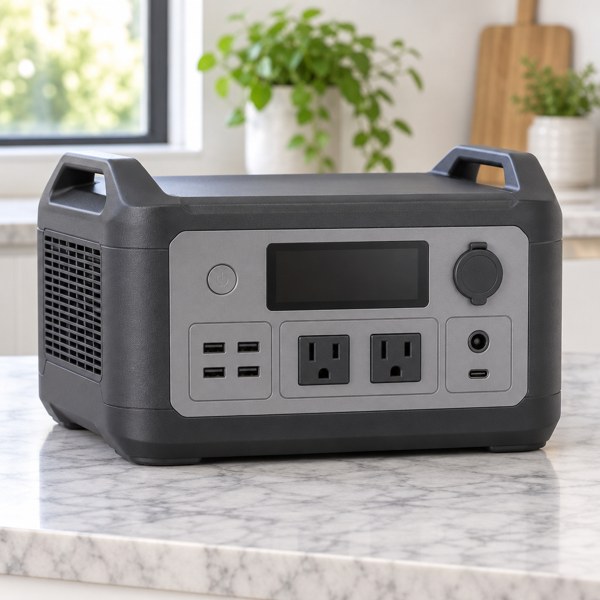
EcoFlow DELTA 3 Plus
If refilling between storm flickers matters most, the DELTA 3 Plus reaches full from the wall in about 56 minutes with no app step. It also takes up to 1,000W of solar, so panels refill it quickly too.
- 1,024Wh LFP, 1,800W output
- Up to 1,000W solar input
- Expands up to 5kWh
Output, Surge and What Each One Can Run
| Load | Typical draw | 1kWh class (about 870Wh usable) | 2kWh class (about 1,740Wh usable) |
|---|---|---|---|
| Refrigerator | About 150W average | About 5.8 hours | About 11.6 hours |
| Wi-Fi modem and router | About 20W | About 43 hours | About 87 hours |
| LED lights and phone charging | About 50W | About 17 hours | About 35 hours |
| Small window AC | About 500W running | About 1.7 hours | About 3.5 hours |
| 1,000W microwave | About 1,500W while running | Jackery 1000 v2 is at its limit; DELTA 3 Plus handles it | Both handle it for short use |
| 1,500W space heater | 1,500W | About 35 minutes | About 70 minutes |
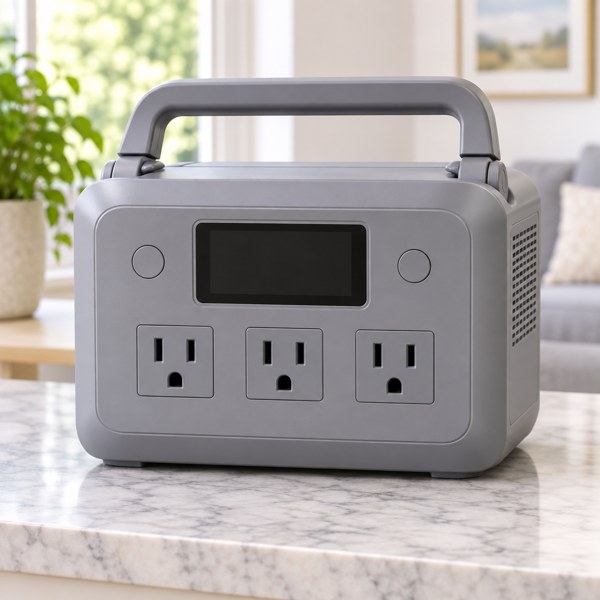
Jackery Explorer 2000 v2
If a fridge is your main outage load, the Explorer 2000 v2 covers roughly 11 hours of average fridge use. At about 39.5 lbs, it is also one of the lighter 2kWh units to carry around the house.
- 2,042Wh LFP, 2,200W output
- 4,400W surge peak
- About 39.5 lbs
Solar Input: EcoFlow’s Biggest Edge
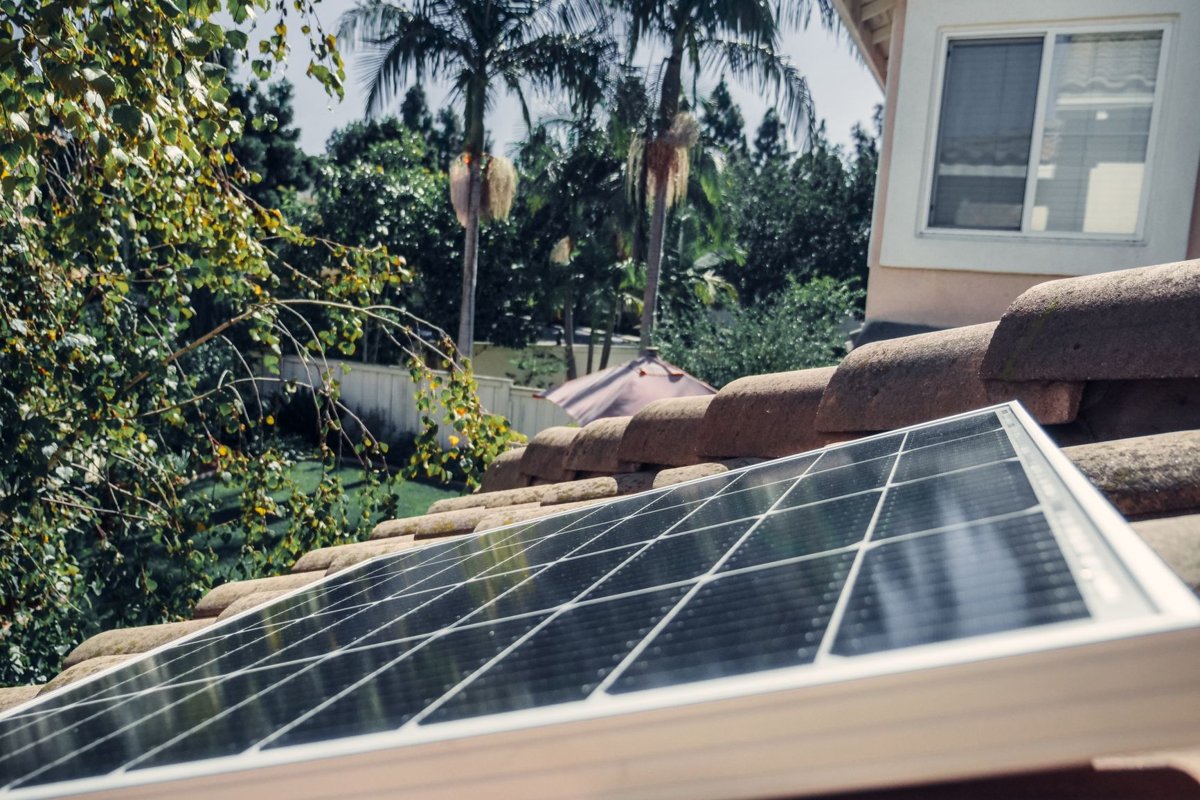
Here is where the EcoFlow vs Jackery choice gets clear. The DELTA 3 Plus accepts up to 1,000W of solar through two 500W inputs (11V to 60V each), and the DELTA 3 Max Plus also lists 1,000W. Both Jackery v2 models top out at 400W across their two DC inputs (16V to 60V).
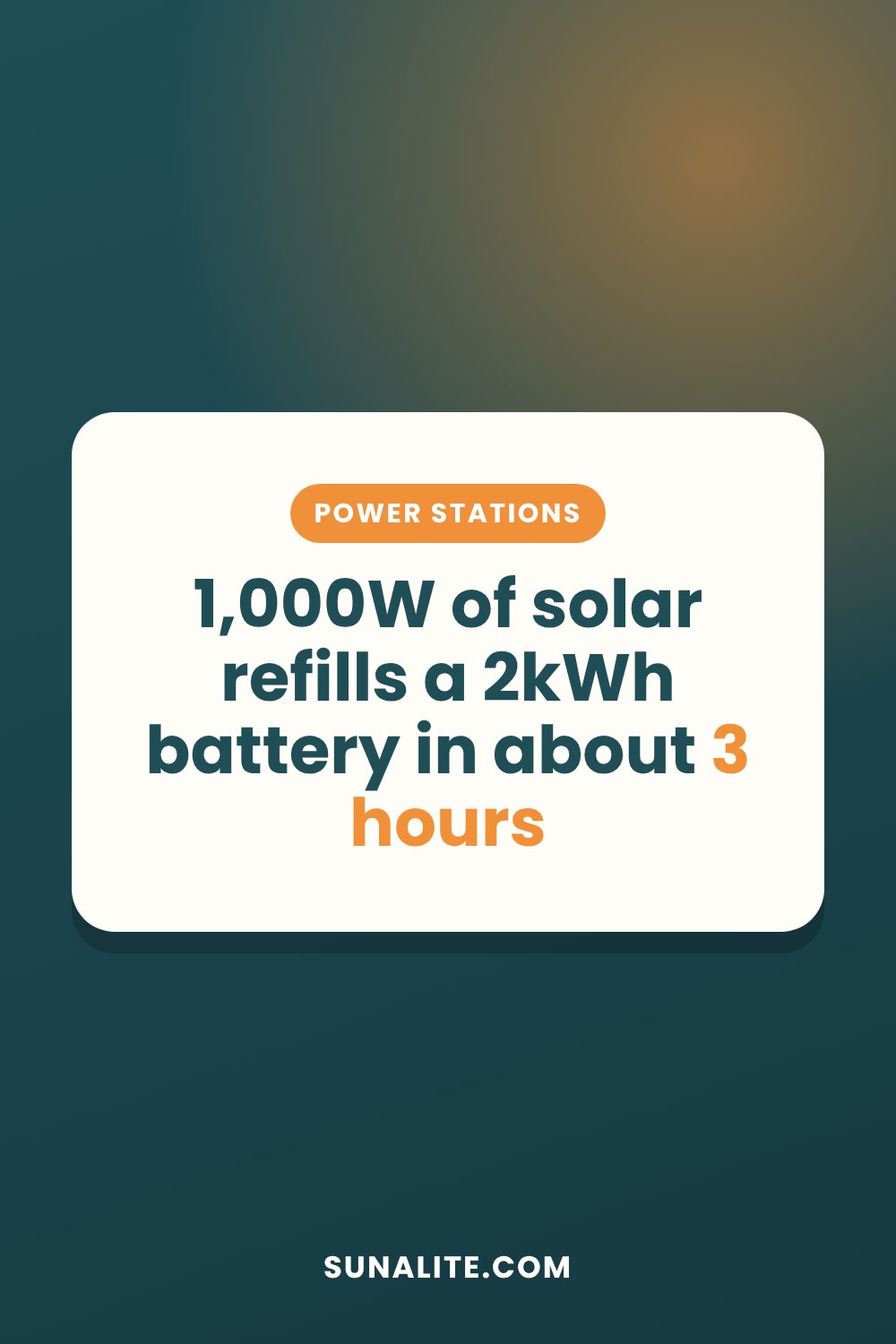
Let’s do the math. Real-world solar output is often about 70% of the panel rating once you account for sun angle, heat and wiring losses. With 400W of panels, that is roughly 280W, so refilling a 2,042Wh Jackery takes about 7.3 hours of good sun. With 1,000W of panels on the DELTA 3 Max Plus, you get roughly 700W, so a full refill takes about 2.9 hours.
In the 1kWh class the same gap shows up: about 3.7 hours of good sun for a 1,024Wh Jackery on 400W of panels, vs. about 1.5 hours for the DELTA 3 Plus on 1,000W. That matters most in short winter days in northern states or under hazy skies, when you only get a few strong hours. Our guide to solar panels in winter and snow explains why.
If you only plan to top up phones, lights and a router, 400W of solar is plenty. If you want solar to carry a fridge through a multi-day outage, EcoFlow’s higher input is a real advantage. Just remember that 1,000W of panels is a lot of roof or yard space, roughly five 200W folding panels.
Expandability and Whole-Home Backup
This is the other big difference. The DELTA 3 Plus can expand up to 5kWh with an EcoFlow extra battery, and the DELTA 3 Max Plus expands from 2kWh to 10kWh, according to EcoFlow’s product pages. Jackery’s product pages for the Explorer 1000 v2 and 2000 v2 do not list an add-on battery, so treat those as fixed-size units.
That means with EcoFlow you can start small and add capacity later. With Jackery, if you think you will need more storage down the road, buy the 2kWh model now or step up to a larger system.
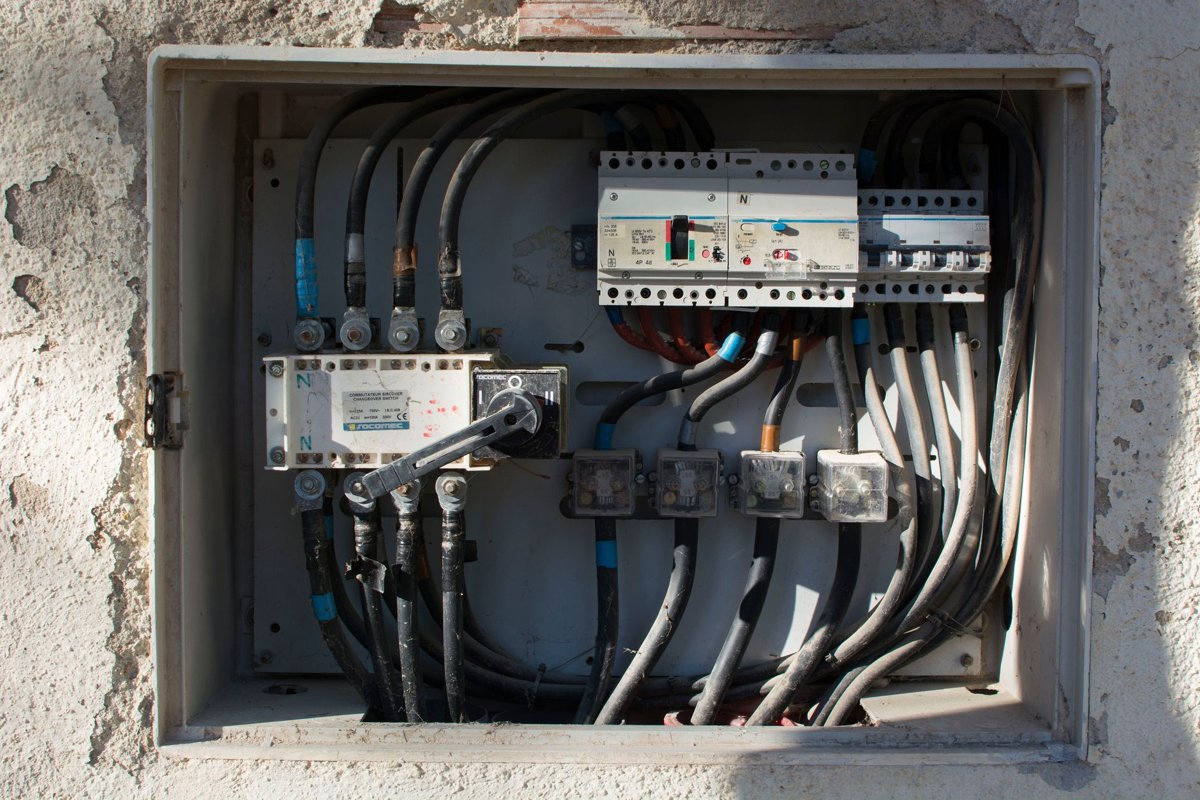
Both brands do have a path to whole-home backup. The Jackery Explorer 5000 Plus offers 120/240V output, expands with battery packs, and pairs with Jackery’s Smart Transfer Switch. The EcoFlow DELTA Pro 3 has a 4kWh battery, 4,000W of 120/240V output and expandable capacity, and connects through EcoFlow’s Smart Home Panel 2 or a transfer switch. Both are much bigger purchases that need a licensed electrician to install the home connection.
For most renters and homeowners who just want to keep a fridge, Wi-Fi and lights going, a 1kWh or 2kWh portable unit is the sweet spot. Our power station sizing guide helps you figure out which class fits your home.
Apps, Ease of Use and Warranty
- Controls: Jackery is known for simple, press-a-button controls that anyone in the house can figure out in the dark. EcoFlow units are also easy to use, but they offer more settings, which is great for tinkerers and slightly more to learn for everyone else.
- Apps: Both brands have apps for monitoring and changing charge modes. EcoFlow lists Wi-Fi and Bluetooth on the DELTA 3 Max Plus, plus app features like storm warning alerts and time-of-use charging on the DELTA 3 Plus. Jackery uses its app to turn on Emergency Super Charge. Neither app is required for normal use.
- Outlets: The DELTA 3 Plus has six AC outlets vs. three on the Explorer 1000 v2, which helps if you want to plug in a fridge, a lamp, a router and a phone charger without a power strip.
- Weight: Jackery is lighter in both classes. The Explorer 1000 v2 is about 23.8 lbs vs. about 27.6 lbs for the DELTA 3 Plus. The Explorer 2000 v2 is about 39.5 lbs vs. about 49 lbs for the DELTA 3 Max Plus, a real difference if you carry it up basement stairs.
- UPS switchover: EcoFlow lists under 10 ms and Jackery lists under 20 ms. Both are fast enough for most routers and lamps, but neither is a true online UPS, so test any desktop computer or sensitive gear before you rely on it.
- Warranty: Jackery’s spec tables list 3 + 2 years, and Jackery advertises 5 years when you buy from Jackery.com. EcoFlow lists 5 years, which on the DELTA 3 Max Plus means 3 years standard plus 2 more when you register in the app. Terms can change and may depend on where you buy, so read the policy before you check out.
How to Decide in 5 Steps
- List what you must keep running. For most homes that is the fridge, Wi-Fi, lights, phones and maybe a sump pump or a fan. Write down the watts from each label or use a plug-in watt meter.
- Check the biggest single load. A microwave or coffee maker can pull 1,200W to 1,500W. If you need that on a 1kWh unit, the DELTA 3 Plus has the headroom (1,800W) and the Jackery 1000 v2 (1,500W) is at its limit.
- Do the run time math. Multiply the battery’s watt-hours by 0.85 for inverter losses, then divide by your average watts. A 2kWh unit with a 150W fridge gives about 1,740 / 150 = 11.6 hours. Our guide on running a space heater on a power station shows why heaters drain batteries so fast.
- Decide how you will recharge. If it is mostly the wall outlet, both brands are fine. If solar is part of your outage plan, EcoFlow’s 1,000W input is a big plus.
- Plan for safety. Plug appliances straight into the power station or use a heavy-duty extension cord. Never connect a power station to your home’s wiring through a wall outlet; use a transfer switch or inlet installed by a licensed electrician.

Pick Jackery If… / Pick EcoFlow If…
- Pick Jackery if you want the lightest unit in each class and the simplest controls for the whole family. The Explorer 2000 v2 at about 39.5 lbs is noticeably easier to move than the DELTA 3 Max Plus.
- Pick Jackery if you mostly recharge from the wall and only use a small folding panel now and then. In that case the 400W solar limit won’t hold you back, and you never pay for features you don’t use.
- Pick EcoFlow if you want more continuous output per kWh. The DELTA 3 Plus gives 1,800W from a 1kWh unit, and the DELTA 3 Max Plus gives 3,000W from a 2kWh unit.
- Pick EcoFlow if solar charging or future expansion is part of your plan. Up to 1,000W of solar input and add-on batteries let the system grow with you. For how Bluetti fits in, see the full Jackery, EcoFlow and Bluetti comparison.
- Either brand works if you size it right. A fridge, Wi-Fi and lights run about the same time on any 1kWh or 2kWh LFP unit, because the usable watt-hours are nearly identical.
What to Buy
Jackery Explorer 1000 v2
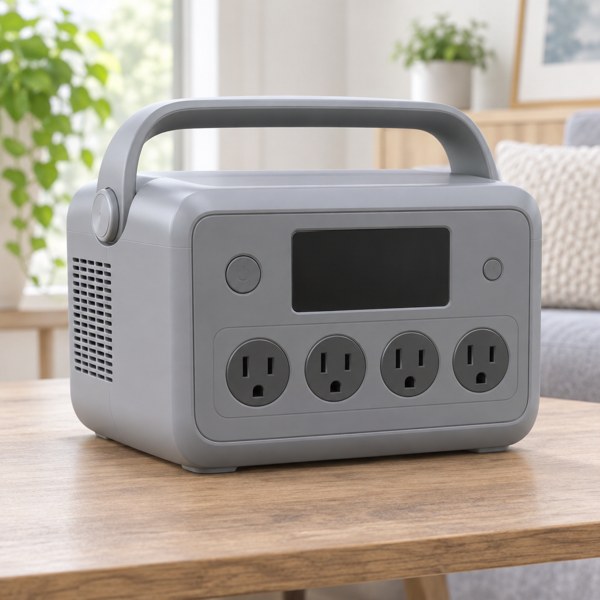
This is a good fit for renters and first-time buyers who want one easy unit for outages and weekend trips. It runs a fridge for about 6 hours and refills from the wall in about 50 minutes in Emergency mode.
- 1,500W output, 3,000W surge
- About 50 min full charge (app mode)
- About 23.8 lbs
EcoFlow DELTA 3 Plus
A 1kWh unit with more output, six AC outlets, 1,000W of solar input and room to expand later.
Jackery Explorer 2000 v2
A 2kWh unit that is lighter than most rivals and runs a fridge for about 11 hours.
EcoFlow DELTA 3 Max Plus
A 2kWh unit with 3,000W of output, 1,000W of solar input and expansion up to 10kWh.
Frequently Asked Questions
Is Jackery or EcoFlow better for home backup?
For a fridge, Wi-Fi and lights, both work well because run times are nearly the same at equal capacity. EcoFlow has the edge if you want more output, faster solar charging or the option to add batteries, like with the DELTA 3 Max Plus. Jackery has the edge on weight and simplicity.
Which charges faster, Jackery or EcoFlow?
From the wall, the 1kWh models are close: about 50 minutes for the Jackery 1000 v2 in Emergency mode and about 56 minutes for the DELTA 3 Plus. In the 2kWh class, EcoFlow is faster. From solar, EcoFlow wins clearly with 1,000W of input vs. 400W.
Can I expand a Jackery or EcoFlow power station?
The EcoFlow DELTA 3 Plus expands to 5kWh and the DELTA 3 Max Plus expands to 10kWh with extra batteries. Jackery’s product pages for the Explorer 1000 v2 and 2000 v2 do not list add-on batteries, so pick the size you need up front or look at the larger Explorer 5000 Plus.
How long will a 2kWh Jackery or EcoFlow run a refrigerator?
About 11 to 12 hours for a fridge that averages 150W. The math is 2,042Wh or 2,048Wh x 0.85 for inverter losses, then divided by 150W. A newer, efficient fridge may run longer, and opening the door often shortens it. The Jackery Explorer 2000 v2 and DELTA 3 Max Plus land within a few minutes of each other.
The Bottom Line
In the Jackery vs EcoFlow matchup, there is no bad choice, just a better fit. EcoFlow gives you more output per kWh, much faster solar charging and the ability to add batteries later, which makes it the stronger pick if solar or a growing system is part of your plan. Jackery gives you lighter units and simpler controls, which makes it the easier pick if you mostly charge from the wall and want something anyone in the house can use. Size it first, then pick the brand whose strengths match how you will actually use it.