Sunalite is reader-supported. As an Amazon Associate I earn from qualifying purchases. This post contains affiliate links. Learn more.
Jackery vs Bluetti is one of the most common matchups people search before buying a portable power station, and for good reason. Both brands now use long-life LFP batteries, both sell solid 1kWh and 2kWh models, and their prices often overlap. If you want the bigger picture with EcoFlow and Anker included, see our three-way brand comparison. If EcoFlow is on your shortlist, our Jackery vs. EcoFlow guide covers that matchup.
This guide goes model by model: the Jackery Explorer 1000 v2 against the Bluetti Elite 100 V2, and the Jackery Explorer 2000 v2 against the Bluetti Elite 200 V2. I checked every spec on the Jackery and Bluetti product pages (as of November 2026), then did the run time math so you can see what each one actually means during an outage.
Table of Contents
Jackery vs Bluetti: Specs Side by Side
| Spec | Jackery Explorer 1000 v2 | Bluetti Elite 100 V2 | Jackery Explorer 2000 v2 | Bluetti Elite 200 V2 |
|---|---|---|---|---|
| Capacity | 1,024Wh (some listings say 1,070Wh) | 1,024Wh | 2,042Wh | 2,073.6Wh |
| Battery type | LFP (LiFePO4) | LFP (LiFePO4) | LFP (LiFePO4) | LFP (LiFePO4) |
| Continuous AC output | 1,500W | 1,800W | 2,200W | 2,600W |
| Surge or boost | 3,000W surge | 2,700W Power Lifting | 4,400W surge | 3,900W Power Lifting |
| Fastest wall charge | About 50 min to full (Emergency mode) | About 45 min to 80% (Turbo) | About 1.7 hours to full (Emergency mode) | About 1.1 hours to 80% (Turbo) |
| Max solar input | 400W | 1,000W | 400W | 1,000W |
| UPS switchover | Under 20 ms | 10 ms or less | Under 20 ms | 15 ms or less |
| Weight | About 23.8 lbs | About 25 lbs | About 39.5 lbs | About 53 lbs |
| Rated cycles | 4,000 to 70% | 4,000+ to 80% | 4,000 to 70% | 6,000+ to 80% |
| Warranty | 5 years from Jackery.com | See Bluetti’s policy | 5 years from Jackery.com | 5 years |
Charging Speed: Wall Outlet and Car
Fast wall charging matters more than most people think. During a big storm, power often flickers back on for an hour before dropping again, and that hour is your chance to refill. Both brands are fast now, but they get there in different ways.
Jackery’s Emergency Super Charge, turned on in the Jackery app, fills the Explorer 1000 v2 from empty to full in about 50 minutes, and its standard charge takes roughly 1.6 hours. The Explorer 2000 v2 needs about 1.7 hours in its emergency mode. Bluetti’s Turbo charging gets the Elite 100 V2 to 80% in about 45 minutes using up to 1,200W from the wall, and the Elite 200 V2 reaches 80% in about 1.1 hours with up to 1,800W of AC input.
In practice, the 1kWh models are close to a tie: both refill in under an hour. In the 2kWh class, Bluetti pulls a little ahead, mostly because its wall input is higher. One note: fast charging modes create more heat and fan noise, so for routine top-ups many owners leave the default speed on and save the fast mode for storm days.
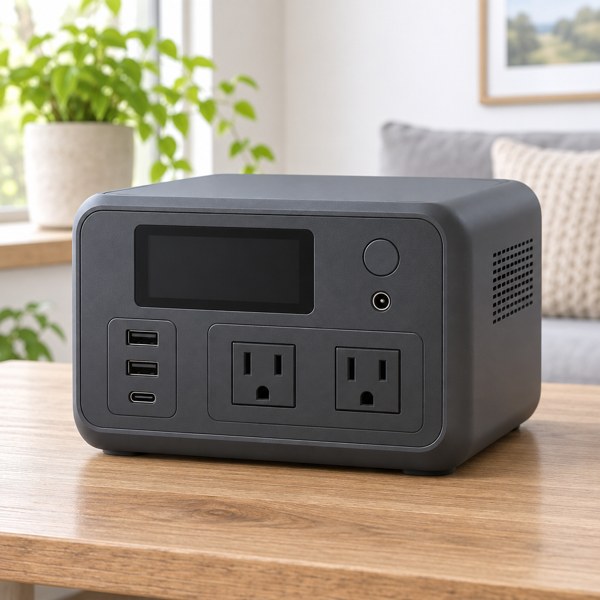
Bluetti Elite 100 V2
If quick refills between storm flickers matter most, the Elite 100 V2 reaches 80% in about 45 minutes from the wall. It also accepts up to 1,000W of solar, so it recharges fast from panels too.
- 1,024Wh LFP, 1,800W output
- Up to 1,000W solar input
- 10 ms UPS switchover
Output, Surge and What Each One Can Run
| Load | Typical draw | 1kWh class (about 870Wh usable) | 2kWh class (about 1,740Wh usable) |
|---|---|---|---|
| Refrigerator | About 150W average | About 6 hours | About 11 to 12 hours |
| Wi-Fi modem and router | About 20W | About 43 hours | About 87 hours |
| LED lights and phone charging | About 50W | About 17 hours | About 35 hours |
| 1,000W microwave | About 1,500W while running | Jackery 1000 v2 is at its limit; Elite 100 V2 handles it | Both handle it for short use |
| 1,500W space heater | 1,500W | About 35 minutes | About 70 minutes |

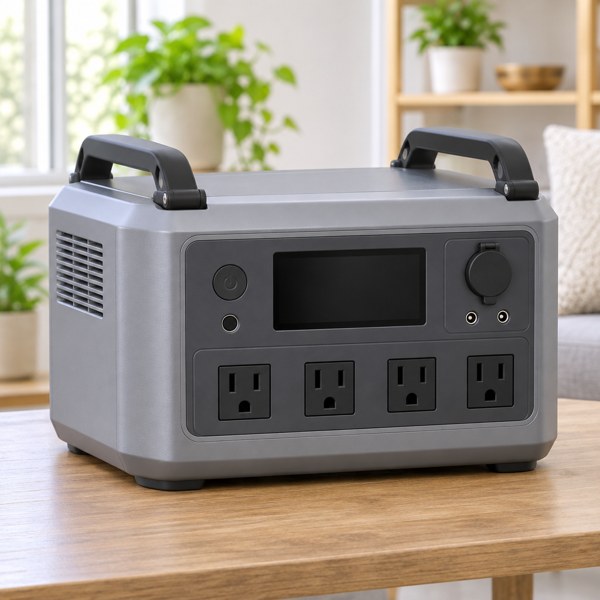
Jackery Explorer 2000 v2
If a fridge is your main load, the Explorer 2000 v2 covers roughly 11 hours of average fridge use. Its 4,400W surge also gives plenty of headroom for compressor startups.
- 2,042Wh LFP, 2,200W output
- 4,400W surge peak
- About 39.5 lbs
Solar Input: Bluetti’s Biggest Advantage
Here is where the Bluetti vs Jackery choice gets clear. Both Bluetti Elite V2 models accept up to 1,000W of solar (12V to 60V, 20A max). Both Jackery v2 models accept up to 400W through their DC inputs (16V to 60V). That is a big gap if you plan to recharge from the sun during a multi-day outage.
Let’s do the math. Real-world solar output is often about 70% of the panel rating once you account for sun angle, heat and wiring losses. With 400W of panels, that is roughly 280W, so refilling a 2,042Wh Jackery takes about 7 hours of good sun. With 1,000W of panels on the Elite 200 V2, you get roughly 700W, so a full refill takes about 3 hours.
In a northern winter, the gap matters even more. Short days and a low sun angle mean you may only get a few strong solar hours, and a Jackery capped at 400W simply can’t collect as much in that window. If you only plan to top up phones and lights, 400W is plenty. If you want solar to carry a fridge through a long outage, Bluetti’s higher input is a real advantage.
Expandability and Whole-Home Backup
None of the four models in this comparison lists an add-on expansion battery on its product page, so treat each one as a fixed-size unit. If you think you will need more capacity later, buy the 2kWh model now or look at each brand’s larger home-backup systems.
On the Jackery side, the Explorer 5000 Plus offers 5,040Wh, 7,200W of output and 120/240V, expands up to 60kWh with battery packs, and pairs with the Jackery Smart Transfer Switch to power selected home circuits, according to Jackery’s 5000 Plus page. On the Bluetti side, the Apex 300 offers 2,764.8Wh, 3,840W of output and 120/240V, expands with B300K or B500K batteries, and connects through a transfer switch or Bluetti’s home backup kit, according to Bluetti’s Apex 300 page.
Both brands have a real path to whole-home backup, but those are bigger purchases that need an electrician. For most renters and homeowners who want to keep a fridge, Wi-Fi and lights going, a 1kWh or 2kWh portable unit is the sweet spot. Our power station sizing guide helps you figure out which class you need.

Apps, Ease of Use and Warranty
- Controls: Jackery is known for simple, press-a-button controls that anyone in the house can figure out in the dark. Bluetti’s Elite units are also easy to use, with a few more settings on the screen.
- Apps: Both brands have apps for monitoring and changing charge modes. Bluetti lists Wi-Fi and Bluetooth for the Elite 100 V2. Jackery uses its app to turn on Emergency Super Charge. Neither app is required for normal use.
- Weight: The Explorer 1000 v2 (about 23.8 lbs) and Elite 100 V2 (about 25 lbs) are both easy to carry. In the 2kWh class, the Jackery 2000 v2 is much lighter at about 39.5 lbs vs. about 53 lbs for the Elite 200 V2.
- Battery life: Jackery rates its v2 units for 4,000 cycles to 70% capacity. Bluetti rates the Elite 100 V2 for 4,000+ cycles and the Elite 200 V2 for 6,000+ cycles, both to 80%. Either way, that is many years of normal use.
- Warranty: Jackery lists 5 years when you buy from Jackery.com. Bluetti lists 5 years for the Elite 200 V2. Warranty terms can change and may depend on where you buy, so read the policy before you check out.
Pick Jackery If… / Pick Bluetti If…
- Pick Jackery if you want the lightest 2kWh unit, simple controls for the whole family, and strong surge numbers for its size (3,000W on the 1000 v2 and 4,400W on the 2000 v2). It’s a great fit for grab-and-go outages and camping.
- Pick Jackery if you mostly recharge from the wall and only use a small folding panel now and then. In that case, the 400W solar limit won’t hold you back.
- Pick Bluetti if you want more continuous output per kWh. The Elite 100 V2 gives you 1,800W from a 1kWh unit, which covers a microwave or coffee maker that would push the Jackery 1000 v2 to its limit.
- Pick Bluetti if solar recharging is part of your outage plan. Up to 1,000W of solar input refills a battery more than twice as fast as 400W, which matters on short winter days.
- Either brand works if you size it right. A fridge, Wi-Fi and lights run about the same amount of time on either brand’s 2kWh model, because the capacity is nearly identical.

How to Choose and Use Either One Safely
- List what you want to run and add up the watts. Read the labels or use a plug-in watt meter for a few days. For a fridge, see our guide to refrigerator run times.
- Check starting watts for motors. Fridges, freezers and pumps pull a burst at startup. For a 1/3 HP pump, our sump pump power guide suggests at least 1,800W continuous and 3,000W+ surge, which points to the 2kWh class.
- Pick your class. 1kWh covers short outages and essentials. 2kWh covers a full day of fridge power plus Wi-Fi and lights.
- Decide how you’ll recharge. Wall only? Either brand is fine. Solar during long outages? Lean toward Bluetti.
- Test before storm season. Charge it, plug in your real loads and time it. Then store it indoors, charged, where you can reach it in the dark.
- Never plug a power station into a wall outlet to feed your house. That is called backfeeding, and it can injure utility workers and damage wiring. Whole-home setups need a transfer switch or inlet installed by a licensed electrician.
- Keep it inside the living space, not a freezing garage. Many LFP power stations limit charging below freezing, so check the charging temperature range in your manual before winter.
What to Buy
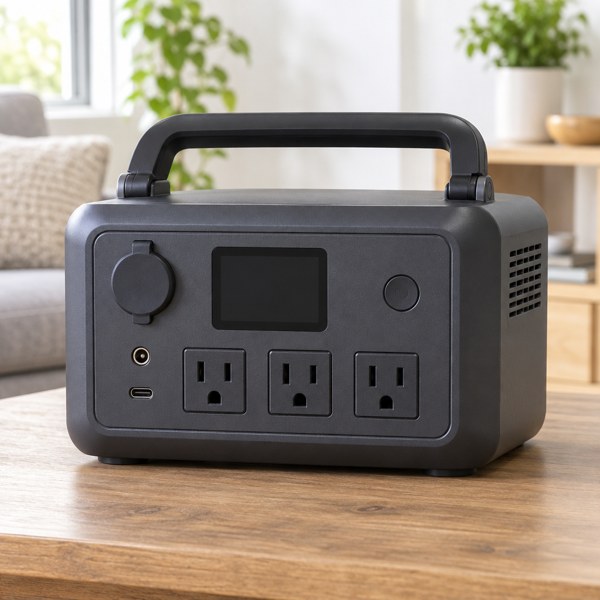
Jackery Explorer 1000 v2
This is a good fit for renters and families who want a simple unit anyone can grab in the dark. It keeps a fridge, Wi-Fi and lights going through a typical evening outage and refills from the wall in about an hour.
- 1,024Wh LFP, 1,500W output
- 3,000W surge peak
- About 23.8 lbs
Bluetti Elite 100 V2
A compact 1kWh unit with 1,800W of output and up to 1,000W of solar input.
Jackery Explorer 2000 v2
About 2kWh with 2,200W output and 4,400W surge, and the lighter of the two 2kWh models here.
Bluetti Elite 200 V2
About 2kWh with 2,600W output and 1,000W solar input, the best of these four for solar recharging.
Frequently Asked Questions
Is Jackery or Bluetti better for home backup?
Neither brand is better across the board. Bluetti gives you more continuous output per kWh and much faster solar charging, while the Jackery 2000 v2 is lighter and has a higher surge rating. For a fridge, Wi-Fi and lights, the Explorer 2000 v2 and Elite 200 V2 run about the same amount of time.
Can I use Bluetti solar panels with a Jackery power station?
Often yes, if the panel’s voltage and current fit the power station’s input limits and you use the right adapter cable. Jackery’s v2 units accept 16V to 60V, and Bluetti’s Elite V2 units accept 12V to 60V. Check the panel’s open-circuit voltage before you connect it.
What is Bluetti Power Lifting, and is it the same as surge?
No. Power Lifting is Bluetti’s mode for resistive devices like kettles, hair dryers and heaters. It lets them run above the rated output by lowering the voltage, so they work at reduced power. It does not help motors start, so for pumps and fridges, compare continuous output and test with your real appliance.
How long will a 2kWh Jackery or Bluetti run a refrigerator?
About 11 to 12 hours for a fridge averaging 150W. The math is roughly 2,040Wh x 0.85 for inverter losses, or about 1,740Wh usable, divided by 150W. Newer, efficient fridges may run longer, and older ones less.
The Bottom Line
In the Jackery vs. Bluetti matchup, both brands make reliable LFP power stations with nearly identical capacity in each class. Choose Jackery for simple controls, strong surge and a lighter 2kWh unit. Choose Bluetti for more output per kWh and solar input that is more than twice as high. Get the size right first, then pick the brand that fits how you will recharge. Still deciding between more brands? Our EcoFlow, Jackery and Bluetti comparison covers the wider field.